UK climate minister Katie White: COP31 must respond to ‘really scary’ science
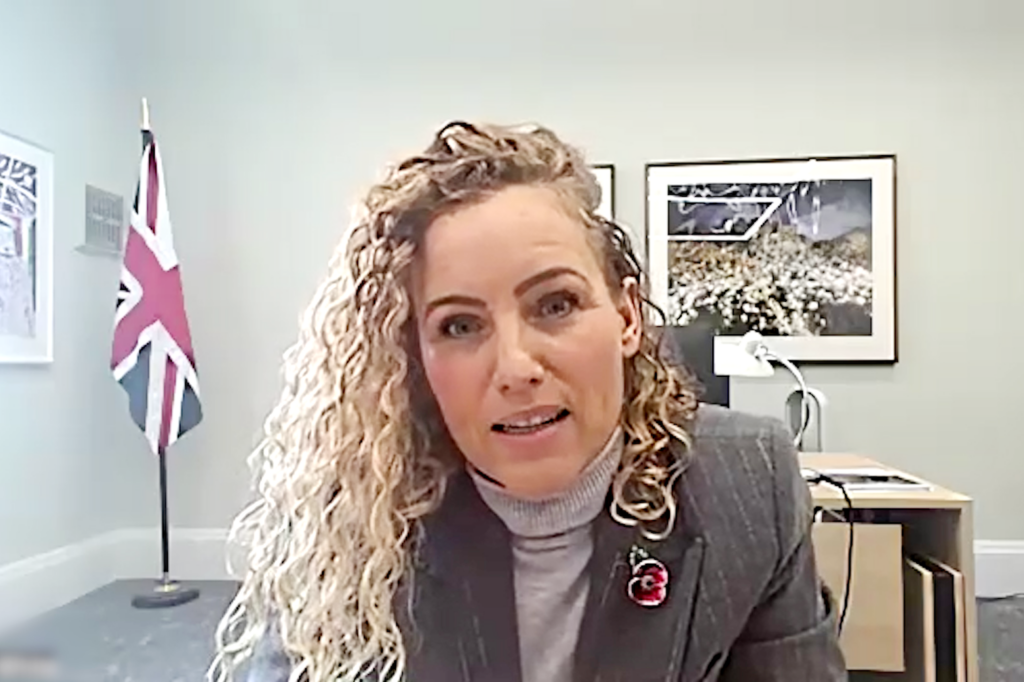
The upcoming COP31 climate talks in Antalya, Turkey need to respond to the latest science on global warming, which is “really scary”, says UK climate minister Katie White.
In an interview with Carbon Brief setting out the UK’s priorities for the summit, White also responds to suggestions that the government is walking back its climate policies.
White says the “shocking” impact of extreme heat and wildfires this summer makes it clear that climate change “isn’t something far off; it’s something we’re living through”.
She adds that the UK will be working to “hold up the science”, including the Intergovernmental Panel on Climate Change (IPCC) reports that should be the “basis of discussions”.
The COP31 presidency push on electrification is “going to be key”, says White, who points to other priorities for the UK that include tackling methane emissions and reducing deforestation.
White says the recent approval of the Jackdaw gas field in the North Sea is “fully in line” with carbon budgets and that the UK continues to support the “transition away from fossil fuels”.
She adds that the Hormuz crisis has helped drive the “biggest uptake…we’ve ever seen” in the UK for solar, electric vehicles and heat pumps.
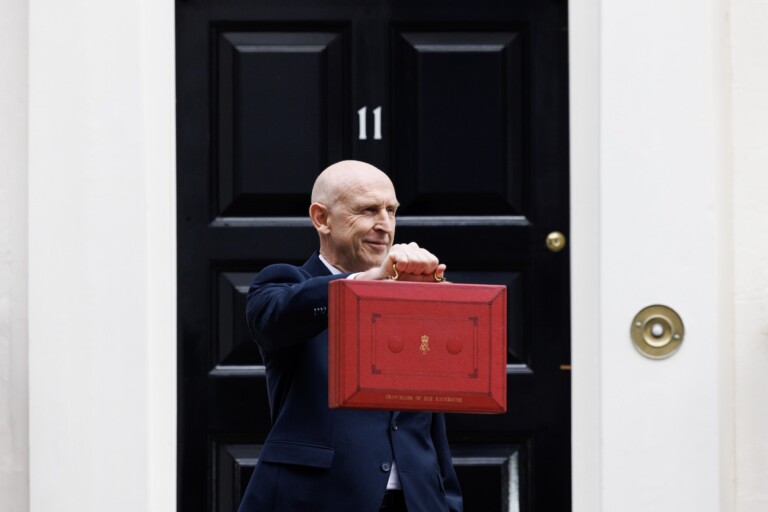
Finally, White defends the new approach set out in the budget by chancellor John Healey, including a greater focus on affordability, as a “natural evolution” of UK government policy.
Carbon Brief: Katie White, thank you very much for joining Carbon Brief today. Next week we’re going to be heading to COP31 climate talks in Antalya in Turkey.
We’ve seen this year the UN warning that a temporary overshoot of 1.5C degrees is now inevitable. We’ve had 50,000 excess heat deaths across Europe this summer. We’ve had extreme weather events hitting Nepal, deadly floods there. Heading into the talks, what would you say the UK’s priorities are?
Katie White: Thanks, Simon. Look, just to say, it’s great to be here. I’m a big fan of Carbon Brief and the work you’ve been doing. I think it’s incredibly important that there are people who are focused on the facts and have really excellent commentary. So just to say thank you, and it’s good to be here to discuss with you.
Look, this year has been a very significant year in terms of climate, particularly sat here in the UK. I think we have really felt the impacts of climate change for the first time. For you and me, who’ve been working on this for a long time [and] we talk about it. But even so – I don’t know how you felt – but I was even shocked by the implications of what that was for everyday life, for people actually sleeping at night. You know, in terms of parliament, I had colleagues who had to go pick up their children because their schools weren’t available, and you know, tragedies in terms of older people struggling in the heat.
Not to mention the wildfires that we had across the country. I went to visit one in Romford and I think just standing – literally in the ashes – and seeing people’s homes really close by. My colleague in Stourbridge, obviously, they had burnt-out houses – you know, devastating. And you think about it – and I talked with her about – the actual real-life implications of that.

Membership
Support award-winning climate journalism
Obviously, people think about it, but then the after-effects, and you know the challenges with insurance and the challenge with all these sky boxes, and all of the things that come – those smaller things, as well as the tragedies around your photos, and all of that being lost.
So I think it’s really opened, sadly, another door for us in terms of the climate-change journey. This isn’t something far off; it’s something we’re living through. I know that’s been the case for many countries for a long time, but it really felt like a shift here in the UK.
You’re right, the science, once again, is really scary. The overshoot report is incredibly concerning. Scientifically, obviously, they look for a longer period. But I think the main message – for me as a politician – is this is really worrying. And every year we have another call to action. How do we translate that call into actual delivery? And that’s the bit we need to make sure of, because you know, I think we have to be listening to the science, and the science is fundamental and key. And we might talk about the IPCC [Intergovernmental Panel on Climate Change] and all the elements of that. But also, for me, how do we translate that?
It’s not, as you all know, it’s not the big global stocktake COP [this year in Antalya]. So it’s not going to be that big event, where we have it every five years. But we still need to be making significant progress. So we really focus a lot on the science, on the “action agenda” and on those political decisions – that “cover decision” that the Australian presidency [of negotiations] has said that they’re going to pursue.
So in terms of the action agenda, which obviously the Turkish [presidency] has led on and [has] been really forthright about leading on this, I think electrification is going to be key. It’s something that shot up the agenda.
I think most of your audience will know what electrification is, but for anyone outside of the climate bubble [it is] around electrifying our homes, electrifying our transportation. And in the UK, we’ve done a good job of decarbonising our electricity system, but we need to be pulling down on that and increasing demand to make sure that we take full advantage of the clean electricity that we have, which would be good for bills, but also around reducing our emissions as well. So something around electrification, we’re expecting a lot of talk of that. [It is] something the Turks have been talking about a lot.
Methane is another area which we’ve been working on, but I expect there will be some progress in terms of methane. Forests, you’ll know that we’ve pledged an investment to the [Tropical Forest Forever] TFFF, so we will be hoping for some momentum around that forests agenda.
So, I think, those are some of the really practical areas of action, as well as making sure we’re moving forward, holding up the UNFCCC [UN Framework Convention on Climate Change], holding up the science, so we can keep moving forward and making progress on any of those areas within the cover decision that the Australians will obviously steer us through.
CB: Great, thank you. You mentioned electrification. Obviously, that’s a target announced by the Turkish presidency earlier this year. They said they want to see the adoption of a global target for 35% of final energy to come from electricity by 2035.
At the moment, it’s a voluntary sign-on pledge, but presumably that’s something that could enter into the cover decision, as you mentioned. I guess I’m wondering: is the UK going to sign up to that, if it remains as a voluntary pledge? And would the UK like to see that in the cover decision, brought formally into the [COP31] outcome?
KW: Good questions. Look, so we’ll wait and see how we manage the next couple of weeks in terms of [that]. I think we have definitely, domestically, been looking at electrification and how we take advantage of the clean electricity that we have more effectively. Because of the Middle East crisis, broadly, we’ve seen interest in EVs, in solar panels and heat pumps, just shoot up this year, as people have got increasingly concerned about energy prices. And for those who are in a position, you know, a lot of them have taken advantage.
So we are seeing shifts in the market, and we’re looking at what role we can play to encourage and accelerate that. Whether it’s supporting the rollout of charging points for electric vehicles. You’ll probably know this, Simon, but there are more public charging points in the UK now than petrol pumps, which I think is an incredible fact – and most people don’t know. That’s not including those within driveways, of which nearly 70% of the UK has access to a driveway, so all of those people who might have their own home charging, there is more public.
We are making this infrastructure more easy, more accessible, so that people can make that shift. But we are [already] seeing the shift, you know, we’ve got two million EVs on the road. Super excitingly for the motor geeks, the second-hand [EV] car market is really starting to – excuse the pun – “motor”. Actually, that does mean a big shift in terms of accessibility.
So we’re seeing this happen within the UK. We’ll look at whether that’s a helpful target for us, but in terms of the focus, the ambition on electrification in the UK will remain. And I’m really pleased to see it as part of the negotiations this year or the action agenda.
It was interesting to see the Europeans do their own electrification – I don’t know whether they called it a plan or a roadmap, everybody gets caught up on these words – but they also brought forward [an “action plan”]. So obviously, we’re looking at where we can, you know, be a little bit more aligned with them.
CB: You mentioned roadmaps. Now, obviously, last year at the COP, the big debate, slightly outside of the formal negotiations, was around the idea of a roadmap away from fossil fuels and the UK was one of more than 100 countries that were really pushing for that to again be brought into the formal outcome of the summit in Brazil. Is that something that the UK is going to be pushing again this year?
KW: For sure. So look, we very much support the agenda around the transition away from fossil fuels. You know, in terms of, how do we support countries, how do we work together in terms of moving away from that? You’ll know that Rachel Kyte, our special representative, was in Santa Marta in April of this year to talk through [this topic] and we hosted a follow-up event at Wilton Park around the London Climate Action Week. So you know, very keen to support and work that through.
It’s obviously a hard agenda, but it’s something that I think we should have been discussing for a while in terms of the COP processes. So it was great that we managed to do that. I think it was as a result of lots of different people talking about it, different campaigns, different, you know, how do we work together around this, in terms of managing the resources we have most effectively, and transitioning away. [That’s] for climate reasons, for health reasons and, in large part, economic reasons as well.
CB: Great. You mentioned the IPCC timeline. This is obviously something that’s been rolling on for quite a while. There’s been a group of countries making a concerted effort to delay the publication of the next IPCC assessment report, so that it won’t align with the next global stocktake under the Paris Agreement.
The UK, as far as I understand, is pushing for that timeline to be accelerated, or to at least align with the stocktake. I just want to confirm that that’s the UK’s position and then ask, what is your understanding of the arguments being made for not doing that, for not aligning those timelines?
KW: So look, we obviously would like to have as much of the science ready for the global stocktake. That would be the ideal outcome in terms of what we are looking for, and we have said that we will continue to say that we would also like an outcome.
So, in a sense, we would like to make sure that we have a decision and we are moving this forward, and we don’t get caught up in having longer negotiations, which stall us making any progress at all.
I wasn’t at the [IPCC] meeting this autumn, but in terms of [what] I understand, [IPCC chair Prof] Jim Skea did a good job of trying to navigate that and making sure that this is inclusive. We want to listen to concerns around inclusivity, but we also want to make progress, because of the reasons that we talked about right up front: there is some really scary science going forward. The IPCC is peer-reviewed, it’s the best in the world, and we want to make sure that that is the basis of discussions.
So the more we can align that together, the better. But we’re also practical. We want to work with everybody. We want to listen to everybody. But we are keen to move that forward and hold up the IPCC in the way it has been. It’s become the most respected, established platform for all that the negotiations are based on.
CB: Great, thank you. I want to turn to the UK now, if I can. So, under the Paris Agreement, the UK has pledged to cut its greenhouse gas emissions to 68% below 1990 levels by 2030. In June, the Climate Change Committee, in its assessment, said something like 17% of the cuts required to meet that target just didn’t have plans in place.
The government’s own carbon budget delivery plan said that current policies were falling short of what would be needed. And then, obviously, since then we’ve had a number of cuts. We’ve had cuts to heat pump subsidies, cuts to hydrogen and carbon-capture and storage. We’re expecting to see further watering down of the zero-emission vehicles mandate for electric vehicles. We just had approval of new drilling at Jackdaw. We may also see Rosebank being approved.
When you’re at the COP in Antalya, how will you be reassuring UK partners that the UK remains committed to its climate pledge?
KW: So look, it’s absolutely right that you pick out any of the challenges – and say where the challenges are to our evidence. That’s really helpful, as part of our process of doing that. I would also then say, there are a whole bunch of other things – on the side of positives – that are moving forward, some of which we have touched on.
We put forward a carbon budget growth and delivery plan last year that we had to redo, because obviously there had been a legal challenge. We did that. It was a very comprehensive process. You know, a huge amount of work to make sure that we were on track to deliver that. So that is the case. The Climate Change Committee was obviously coming back on what was happening now, and we will report to parliament [in response to the committee] in the normal way. I will leave that report to talk for itself when it comes out to parliament.
We also – the great thing about the Climate Change Act and the carbon budgets is that it does allow flexibility over time. You have that trajectory, you have the volume of emissions over time, but it does allow you to adjust and course correct. There are things, in terms of challenges, that come forward.
So let’s take the Middle East crisis. Obviously, that’s been a big disruption to our energy and climate system. Arguably, one of the biggest disruptions we’ve ever had. Now, that has led to a few things happening.
One is to say that electrification – you know, people are moving towards the biggest uptake in solar, heat pumps and EVs that we’ve ever seen. So we’re seeing that trajectory go up. That’s great, and that is on the positive side. At the same time, it has meant geopolitically, people are looking at their energy security and where you do have access to fossil fuels, people are considering those options.
We made the Jackdaw decision fully in line [with our carbon budgets]. We looked at the emissions – and emissions would actually be a tiny bit lower because of transportation from Norway. So it is absolutely within those boundaries.
But of course, I’m constantly keeping an eye on how that budget is moving. In the same way that over the road [in Whitehall] at HMT [the Treasury], they’re keeping an eye on their financial budget, as they should do, I will keep an eye on the carbon budget, as will the secretary of state [Miatta Fahnbulleh]. So we will be keeping a look.
But I think let’s also be clear that the UK has got a good story to tell. I of course want it to be better, and that’s part of my job, to make sure that we have the next chapter evolving and we can keep telling our story.
But right now, we have a pretty good story to tell. You know, we’ve got over [a] 50% reduction in emissions, whilst having 80% [economic] growth since 1990. So we have got a good story to tell. We are making those transitions and we will continue to say that. But also, we’ll continue to listen and learn because nobody has got the perfect plan for this. No one country has got all the answers or the solutions.
So I think, being clear where we’ve had success, being honest where it’s not worked, and having a bit of humility to learn from others along the way, is how we’re going to approach the COP.
CB: Great, thank you. I want to ask about climate finance. The UK is one of the only major donors to have made a new climate-finance pledge, offering £6bn, I believe, over three years. However, that is, relative to the last financial year, roughly halving; it was about £4bn in 2025-26 and it’s [now] £6bn over three years, so roughly £2bn a year.
Again, I’m just curious how you’re going to be talking about that with the UK’s international partners, the developing countries that will be looking to the UK for that kind of support.
KW: In terms of the £6bn, so look, let’s also be clear. So you’re absolutely right that we – the [previously pledged] £11.6bn was over a five-year period. The £6bn is over a three-year period, and we’re also talking about an additional £6bn in terms of other sources that we’re looking at. So it is still a sizeable amount of money and investment.
Of course, it’s not enough in terms of what the need is, and as the need increases over time, we need to be exploring other options, which is why I’m very excited about the TFFF, because it starts a new way of mobilising finance, which might unlock a whole other range of capital, which is urgently needed.
So, look, we have the £11.6bn [and] we delivered absolutely every bit of it. So I think we’re seen as someone who is a credible donor, who delivers what they say we’re going to do. We’ve also laid out a plan. We’ve been working across government with my colleagues at the Foreign Office and with Defra [Department of Environment, Food and Rural Affairs] in terms of how we’re going to do that. Which, again, was something that developing countries were really keen [on], that we laid out that plan beforehand, so that there is some element of expectation, and it’s not, you know, done at the last minute, and they can plan ahead at the same time.
We are, you know, the biggest donors of the Green Climate Fund as well, and we’ve looked at how we protect the climate element of our resources within the ODA [overseas development aid] cuts, which have been a cut to our international development aid, I can’t say anything different to that. So we have looked at how we protect [climate] within it.
So, look, of course, I will be talking about what we have done and what we continue to do, and how we’ve listened to countries and laid that [plan] out, so there is some element that they can help plan ahead. But also, looking at what those alternative sources, for instance, around the structuring of the TFFF, to make sure we’re looking at other options, because we do need to meet the need. The need is growing, and the finance pot needs to do the same.
CB: Thank you. One final question, if I may. Last week we obviously had the first budget from the new chancellor, John Healey. There’s been a lot of conversation and media coverage since that budget about what he described as a new path for energy policy in the UK. There’s been quite a lot of media coverage – and perhaps briefing from government insiders and so on – suggesting that this is a real shift in the government’s approach. Effectively, giving up on – or putting slightly to the side – the clean power 2030 target.
Again, you’re going to be going into the COP next week. People, I’m sure, will have been reading the papers. I wonder how you will explain to them what’s going on?
KW: So, look, the first thing I’d say is it was great to hear the chancellor say on the floor of the house [of parliament] about net-zero, his commitment to net-zero by 2050 and our steadfast approach to delivering that. I think it’s really helpful. You know, the chancellor’s voice counts for a lot. We’ve heard the prime minister say it twice. He’s written articles on it as well, so it’s great to see that commitment from the top. There has been a lot of politicisation around net-zero, so I think the direction of travel is absolutely clear.
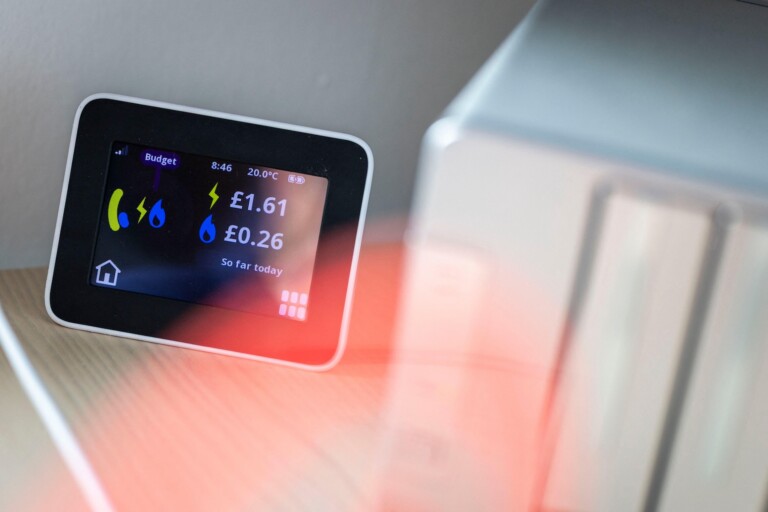
[The] secretary of state has said that her number one aim is around affordability. We know that we are in a cost of living crisis. At the same time, the Climate Change Committee has said the best thing we could do [to lower emissions] is bring down electricity prices, and so I think there is a really great alignment between those three things [cost, climate and security].
The clean-power mission has been incredibly effective in terms of getting a lot of clean power built. We now need to make sure we’re utilising that clean power across the board, and we need to, and we want to do it in the most cost-effective way possible.
As you can probably hear from my accent, I’m from Yorkshire. We’re a little bit tight [careful with money] and I want to make sure that we are using that energy most effectively. And the system at the moment is not set up to do that. There are some pretty ineffective elements of it, that we want to make sure that we’re using far more effectively.
So I think that is the shift we’re looking at. We’re now in the next chapter of, how do we make sure that energy – and specifically electricity – is as affordable as possible for consumers, for our constituents up and down the country, but also for small businesses. And how do we make sure that demand, that use of the grid, is [met by] connecting some of these great [clean-energy projects].
You know, the last government did build some of these offshore wind turbines. They just didn’t connect them all, so we need to make sure that we’ve got all of these things connected, and then we’re utilising it really effectively, and we’re supporting consumers and businesses to draw down on that.
So I think it’s a really exciting opportunity for us. But I think it’s just a natural evolution of the next step, to make sure that the UK citizens are getting the best value from the infrastructure that we already have.
CB: Brilliant, very, very quickly, before you have to go, the UK is going to be leading the umbrella group of countries at the COP. So coming back to the COP, I’m just curious how the UK is going to deal with being in that spotlight [and] make use of that position?
KW: Look, we are sending a great team of ministers to the COP. Obviously, the secretary of state, it’s going to be her first time leading the delegation, but our ex-secretary of state [Ed Miliband] is there in his new role. He’s going as the foreign secretary and the prime minister [Andy Burnham] is going, and I will also be there as well. So I think we are turning up, making sure that Britain is fully part of the conversation.
We do that in lots of different ways, whether it’s part of the umbrella group or whether it’s on our own or whether it’s part of – I co-chair the Forest and Climate Leaders Partnership. We’re always looking at ways where the UK can show up and try to make a positive difference.
So again, I think we’ll be doing that, but working closely with our umbrella colleagues. We’ve been in the group, so it’s a natural step for us to step up and do that. But I think operating in different areas of the ecosystem helps us to make sure we can bring forward a really comprehensive, thoughtful approach to the negotiations.
CB: Brilliant! Thanks very much, Katie, and great to have you.