
Scientists compare climate change impacts at 1.5C and 2C
“Two-headed goal”
The Paris agreement – adopted in December 2015 and due to be officially signed by more than 150 countries on Friday – codified what the authors of today’s study call a “two-headed” temperature goal. It pledged to keep the average global surface temperature “well below 2C” and “pursue efforts” to limit the increase since preindustrial times to 1.5C. The nod to 1.5C recognised that many low lying island nations are already feeling the impacts of climate change and that coral reef and Arctic ecosystems face high risks well below 2C. But the specific reference to 1.5C as well as 2C caught the scientific community somewhat off-guard. Today’s paper says:“Despite the prominence of these two temperature limits, a comprehensive overview of the differences in climate impacts at these levels is still missing.”
A recent commentary in Nature by Prof Simon Lewis, professor of global change at University College London, is a little stronger on this point. As he puts it:
“The emergence of 1.5 C as a serious policy position comes with important lessons for scientists. The global research community has shockingly little to say on the probable impacts of a 1.5 C rise.”
The scientific community now, at least, seems to be rising to the challenge. Last week, the IPCC confirmed it will dedicate one of its special reports to the 1.5C goal. This is due to be published in 2018.
Work on today’s paper began in 2014, long before the Paris conference. The United Nations Framework Convention on Climate Change called on scientists to explore the difference between a 1.5C and 2C long term goal, as part of its 2013-2015 review.
Prof Carl-Friedrich Schleussner, scientific advisor at Climate Analytics in Germany and lead author of today’s study, tells Carbon Brief:
“[The review] concluded last year that, while 2C cannot be considered safe and 1.5C would clearly be a safer limit, the science on 1.5C is less robust than on 2C. So clearly, there’s a research gap here.”
A 1.5C vs 2C world
The study compared how extreme weather, water availability, crop yields, sea level rise and risks to coral reefs differ in a world where global temperature rises 1.5C, compared to if it rises 2C. Using 11 climate models, the authors looked at how each of the impacts plays out globally, as well as in 26 different regions. This is important since the world won’t warm at the same pace everywhere, the paper notes.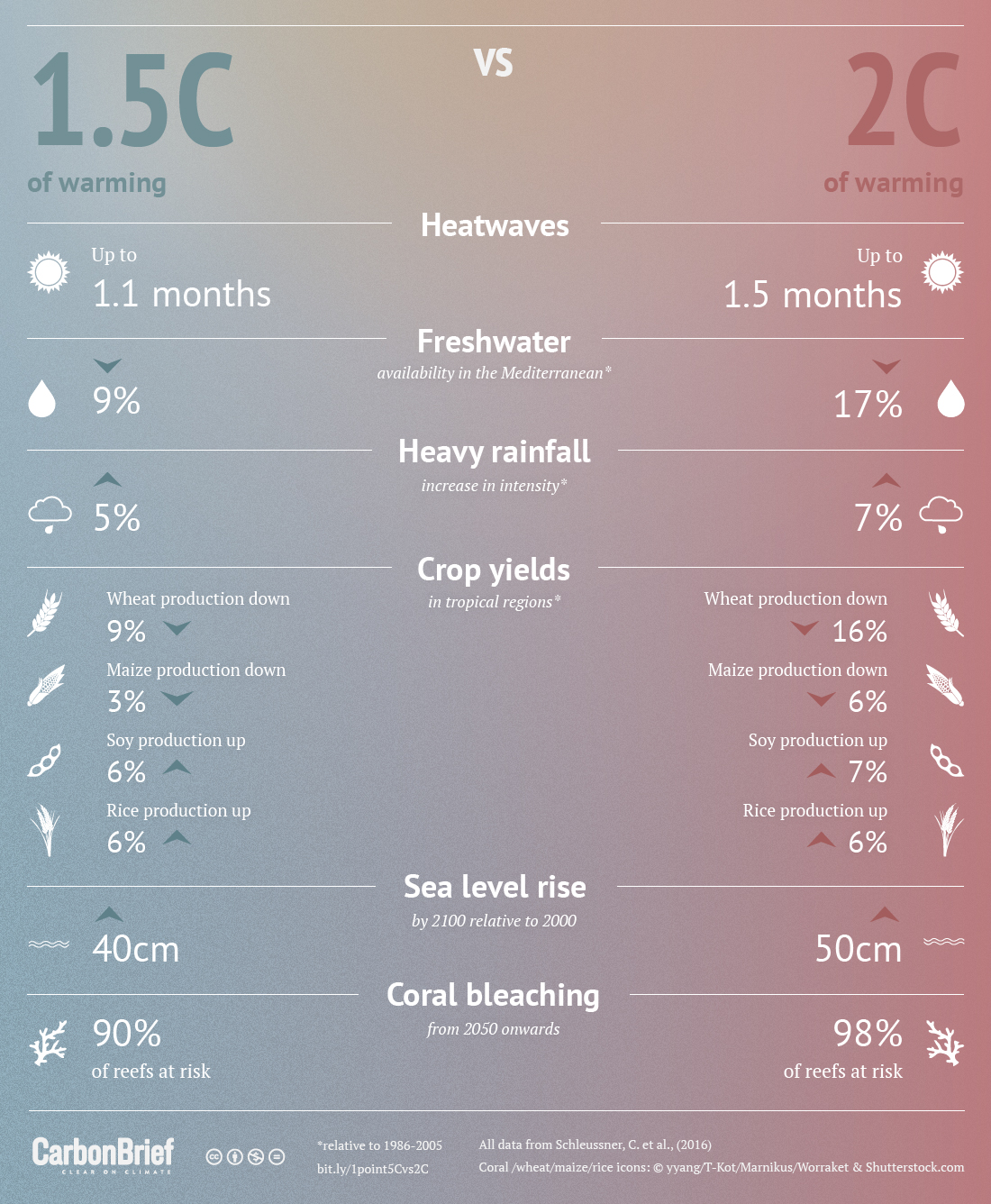
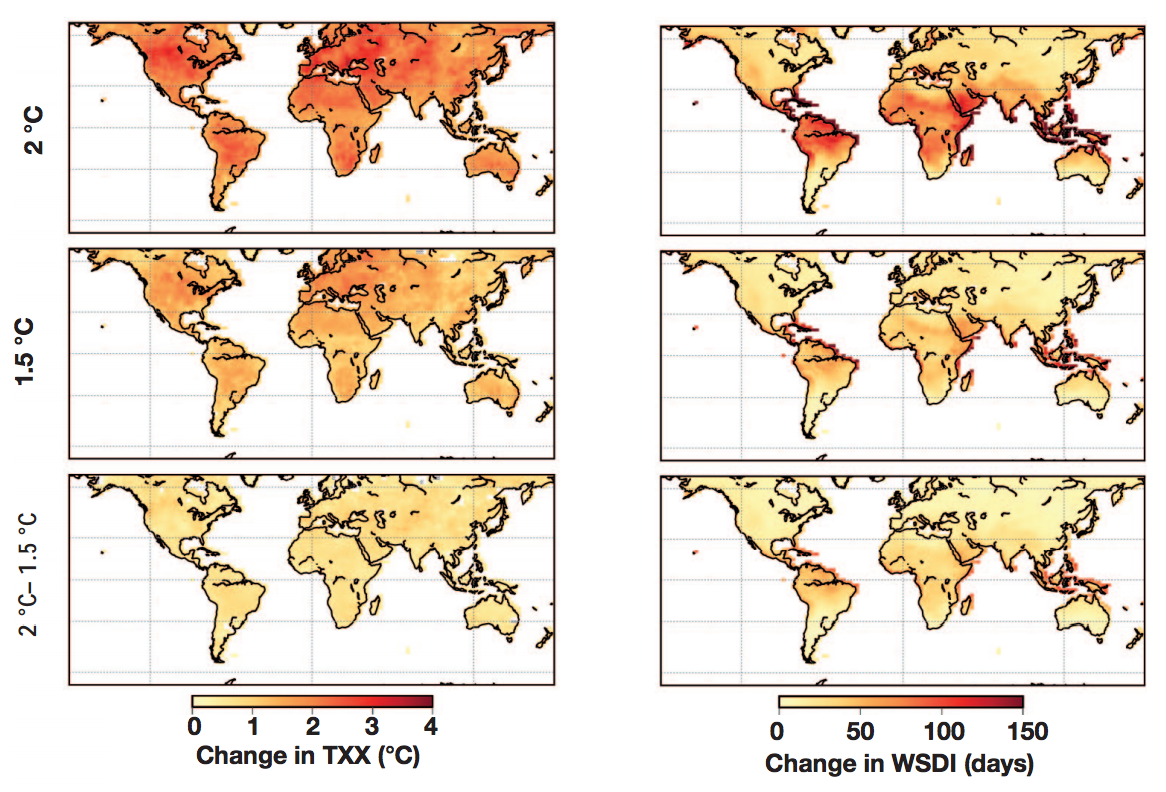
“[T]he additional 0.5C increase in global-mean temperature marks the difference between events at the upper limit of present-day natural variability and a new climate regime, particularly in tropical regions.”
High northern latitudes are expected to see some of the biggest increases in heavy rainfall, with the maximum over a five-day period rising by 7% for 2C warming, compared to 5% for 1.5C.
At the same time, water scarcity in the Mediterranean is likely to be twice as severe at 2C than at 1.5C, with climate-induced shortfalls of 17% compared to 9% (relative to 1986-2005 levels).
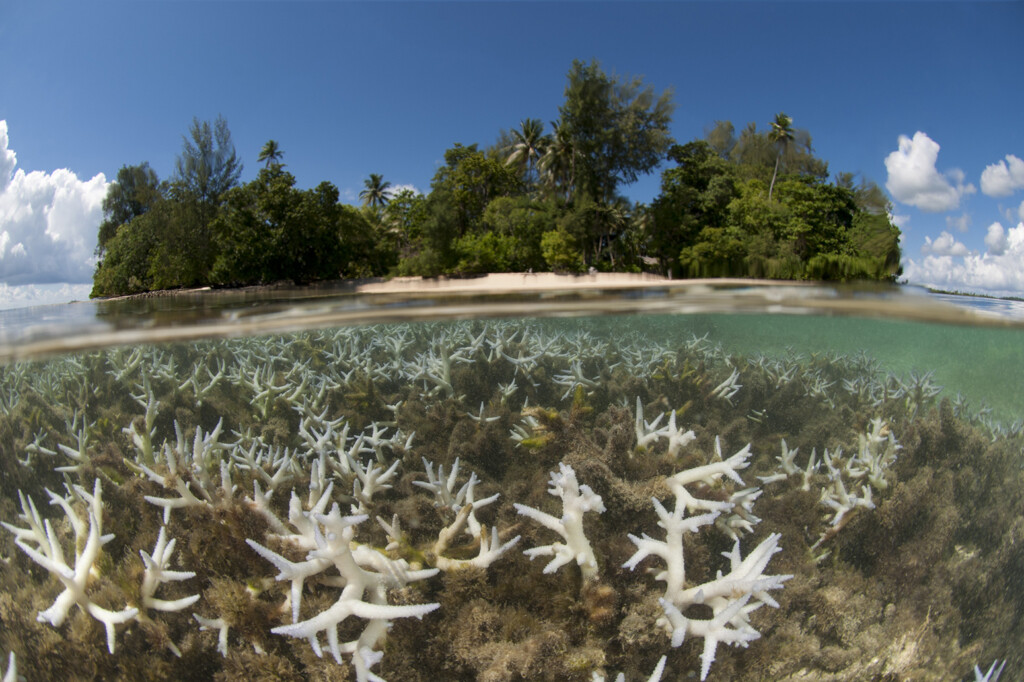
The study shows global sea level rising 50cm by 2100 with 2C of warming, compared to 40cm for 1.5C (both relative to 2000). Warming of 2C would also put 98% of the world’s reefs at risk of coral bleaching from 2050 onwards, compared to 90% for 1.5C.
“However, observational evidence is pointing towards the fact that climate change is already negatively impacting agricultural yields.”
The new study’s results are in line with previous research suggesting an average reduction of about 6% in global wheat yields per degree of warming, Schleussner tells Carbon Brief.
Tropical regions, such as West Africa, Southeast Asia, Central America and northern South America, are likely to be worst affected, the study notes, with yields of wheat and maize set to decline.
The study accounts for the potential of higher CO2 to have a positive effect on crop yields, particularly in high-latitude regions, but notes this is still not well understood.
Reality check
The sheer scale of the contrast between climate impacts 1.5C and 2C came as “quite a surprise” to the authors, Schleussner tells Carbon Brief:“Our results clearly show that the difference between 1.5C and 2C is not only a matter of gradual change.”
So, should 2C remain the reference point for “dangerous anthropogenic interference in the climate system” or are impacts at 1.5C severe enough to warrant a rethink?
While science can make sure there’s as much evidence as possible, that’s a conversation that extends further than the scientific community, say the authors in the paper:
“Although the assessment of levels of dangerous interference is primarily a political process that requires value judgements and depends on different world views, it needs to be informed by the best available science outlining the impacts of climate change and mitigation efforts.”

“Scientific findings…show that it is both physically and economically feasible to limit warming to below 1.5°C by 2100, after temporarily exceeding 1.5°C in the 2050s (but still staying well below 2°C).
But doing so involves relying on being able to “suck” carbon dioxide out of the air, using so-called negative emissions technologies (NETs). Carbon Brief ran a special series of article last week looking in-depth at possible approaches and how feasible experts think they are.
Even if overshooting and coming back down to 1.5C were technically possible, there’s no guarantee the consequences for ecosystems would be the same as if we hadn’t cross the 1.5C boundary at all. Whether or not climate change impacts are “reversible” is a very important research topic right now, says Schleussner.
Today’s study is an important first step to understanding the real-world consequences of what countries agreed to do, in principle, in Paris.
While it lays out the scientific reasoning behind a 1.5C target, the question of if and how we get there is part of a far bigger conversation, one that’s particularly pertinent as nations gather in New York this week to reaffirm their collective commitment.
Article information
For a more up-to-date and interactive version of this article see “The impacts of climate change at 1.5C, 2C and beyond“. Carbon Brief has extracted data from around 70 peer-reviewed climate studies to show how global warming is projected to affect the world and its regions.