
Bangkok climate talks: key outcomes on the Paris Agreement ‘rulebook’
Setting the rules
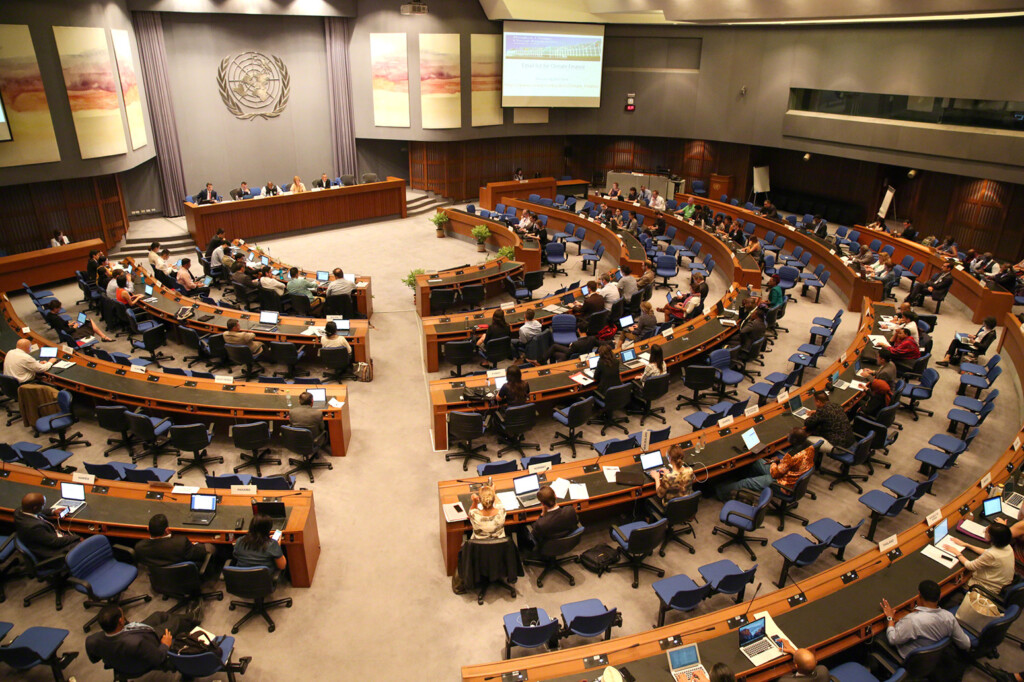
The Paris Agreement on climate change was struck in 2015. By 2016, it had been ratified by enough countries to bring it into force, but it will only apply from 2020. The talks last week, which ended on Sunday evening, aimed to continue hammering out its finer details, known formally as the “Paris Agreement work programme” (PAWP) and informally as the Paris “rulebook”. This instruction manual must be finalised by the end of this year. Yamide Dagnet, project director on international climate action at the World Resources Institute, says the rulebook is important for the credibility of the multilateral climate regime. She tells Carbon Brief:“We know this is very important. We’ll need it not only to guide a country’s action on the ground and help them to enhance their NDCs [Nationally Determined Contributions, or country climate pledges] by 2020, but also to really hold accountable parties who commited to adopt those rules by this time.”
There was a lot to get through, with slow progress in the previous negotiating session in May in Bonn having led to this additional Bangkok session being scheduled. In a joint “reflections note” released ahead of the talks, the diplomats leading the talks wrote:“The main objective of the additional session in Bangkok is to reach an agreed basis for negotiations for all PAWP items, reflecting clear and streamlined options, and with sufficient detail for the outcome of the session to be swiftly turned into draft decision text. If Parties do not achieve this in Bangkok, a satisfactory outcome in Katowice will be in jeopardy.”
These pieces of UN climate jargon (“reflections note”, “agreed basis for negotiations”, “streamlined options”, “draft decision text”, “informal notes”) are all different ways to describe pieces of text. The coded language refers to different levels of progress on the journey from collections of disparate country proposals through to universally agreed legal decisions. Roughly speaking, proposals are organised into “informal notes” or “tools” and then “streamlined” until they are concise and clear enough to form an “agreed basis for negotiations”. These are then crafted into “draft decision text” which looks like a final legal decision, but includes a range of clearly articulated different pieces of language in square brackets, for example, giving legally binding or indicative instructions as “[shall][should]”. Finally, negotiators settle on a single formulation and adopt the legal decision text.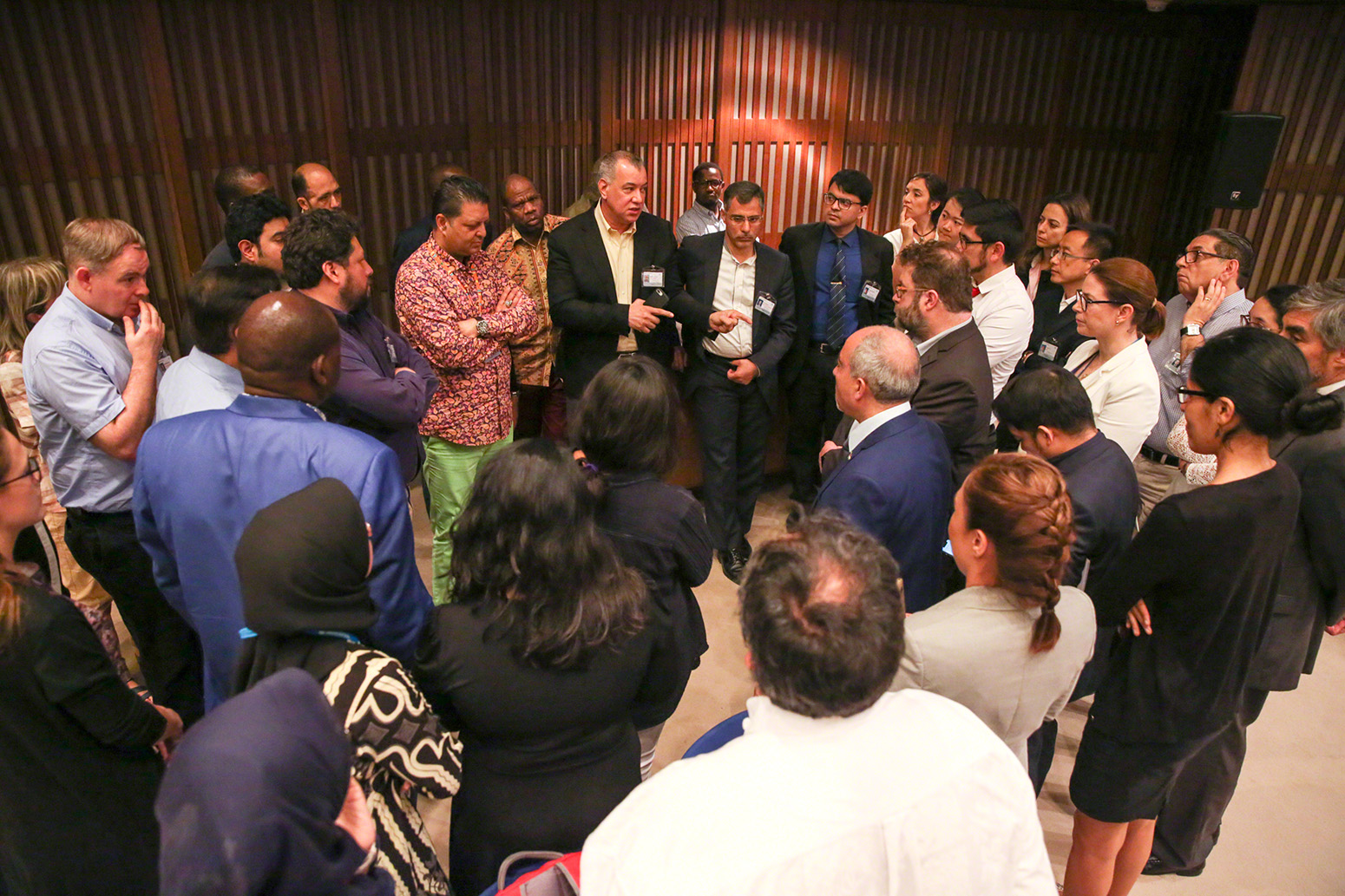
“We have fortunately avoided going off the cliff edge. Governments have empowered the co-chairs to turn the progress made so far into a more solid basis for negotiations in Poland. It is now vital for the co-chairs to change the course of the negotiations from diplomatic doldrums towards a win-win approach and craft middle ground options that the whole world can get behind at COP24.”
Paris pledges
A key element of the Paris rulebook is to set out the rules for how countries should format their climate pledges, known as NDCs. This is currently one of the areas of that needs most streamlining, according to Dagnet, with a new version of the NDC “negotiating tool” released at the end of Bangkok running to 35 pages. Key issues include whether guidance should cover mitigation (emissions reductions) alone, or also adaptation, climate finance and “loss and damage”; and how accounting for mitigation actions would best allow their impact to be understood. Alongside the mass of small-scale technical discussions that need to be resolved on this topic, several political issues stood out at the talks in Bangkok. Most significant was a dispute over whether rules on NDCs should be common to all or split into differentiated versions for developed and developing countries. This “two-tier” rulebook, pushed by China and its allies, would mean some elements would only be compulsory for developed countries. However, the idea was opposed by the EU and blocked by the US and its allies from the negotiating table in Bangkok. https://twitter.com/climatemegan/status/1038649877964541953?s=09 Another issue was how often the NDCs should be updated. Options on the table included five years, 10 years, or a rolling “5+5” of firm plans and indicative targets subject to review. A proposal from the like-minded developing countries group (LMDC), meanwhile, suggested an option that would see common time frames only for developed countries.Camilla Born, senior policy adviser at green thinktank E3G, tells Carbon Brief this last issue is not that complicated on the technical side, but now needs political oversight, which was not available at the more technical talks in Bangkok.THREAD
— Simon Evans (@DrSimEvans) September 5, 2018
It's hard to grasp the scale & complexity of the task facing climate negotiators meeting in Bangkok this week, ahead of COP24 in Poland.
They must agree on the 'rulebook' needed to implement the Paris Agreement.
Here's one tiny window onto their gigantic effort…
1/ pic.twitter.com/MNbf49bLoQ
Transparency
Transparency negotiations for the rulebook cover how compliance with the Paris Agreement will be monitored. This “transparency framework” covers a range of issues, including methodology for reporting on national greenhouse inventories, tracking progress, climate change impacts, adaptation and the support provided by developed countries to poorer nations. In Bangkok, negotiators developed a new version of their “negotiating tool”, running to 75 pages. Dagnet tells Carbon Brief the tool includes attempts to streamline the options and refine country proposals. As with climate pledge guidance, Dagnet says the “hottest topic” remains “flexibility’ – what will be common to all parties and what is differentiated between developed and developing countries. Transparency is also strongly linked to discussions of the “global stocktake”. This is a process embedded in the Paris Agreement set to take place every five years, beginning in 2023, to inform each round of climate pledges. A final iteration of the global stocktake “negotiating tool” ran to just 13 pages.Finance
Climate finance to help developing countries meet their obligations was, as always, a key sticking point at the talks. Speaking midway through the week on behalf of the LMDC at a stocktake of progress to date, Iran noted that:“For us, within the LMDC, it is clear without any positive movement on finance, positive movement as well in the Paris Agreement work programme will not be possible.”
Concerns from developing countries relate to current flows of finance, which they say is not yet high enough to meet a promised $100bn per year by 2020, as well as the position of finance in the rulebook, where there are several points of dispute. One key dispute is over the predictability of financial flows from developed to developing countries. This “ex ante” reporting Is required under Article 9.5 of the Paris Agreement and is supposed to set out every two years “indicative” or “projected” levels of finance that will be given in future. Developing countries argue a process for this reporting is crucial to help them plan effectively for climate action. But developed countries say there is not a mandate to discuss this issue at the current time, according to Joe Thwaites, associate at the finance center of the World Resources Institute. Another point of dispute, carrying on from the Bonn meeting in May, was a push by developing countries to start discussing a new climate finance goal, which is due to kick in from 2025. “All they’re trying to decide on is when they will start discussing what the process will look like of deciding the 2025 goals,” says E3G’s Born. But developed countries again argued the issue was currently out of scope for an already packed agenda. According to Born, both of these finance issues will need political guidance, making them difficult to resolve at the more technical talks in Bangkok. Discussions will continue at a diplomatic level in Katowice. However, talks did advance on these and other areas of finance, says Thwaites: “By the end of the session, some finance negotiating tracks advanced close to legally written negotiating texts, with clearer options where there are areas of disagreement.” Hanging over the finance discussions was also the pending replenishment of the Green Climate Fund (GCF), an important vehicle, diplomatically, for delivering climate finance. The GCF has come under criticism after its latest board meeting failed to approve any new projects amidst reports of antagonistic relations between donor and recipient countries.India, Saudi Arabia, G77+China, Africa Group all cite finance as key to a deal in Katowice later in 2018… India pointed in contesting analysis that #climate $$$ is on track + calls for long term money target to be agreed by 2023 #SB48Bangkok
— Ed King (@edking_I) September 6, 2018
Carbon markets
The Paris Agreement establishes a voluntary “mechanism to contribute to the mitigation of greenhouse gas emissions and support sustainable development”. Some progress was made on this market mechanism in Bangkok.
Looking ahead
With the conclusion of the Bangkok talks, COP24 is the next (and final) opportunity to complete the details of the Paris rulebook. There is still a vast array of complex technical issues for countries to decide. One small but important decision was to open the COP24 talks a day earlier than planned, giving negotiators a vital extra day to begin smoothing out the final shape of the rulebook. However, there will also be other opportunities ahead of this during some of the key events listed in the table below. For example, the Global Climate Action Summit will be taking place in California this week and the Intergovernmental Panel on Climate Change (IPCC)’s special report on the impacts of global warming of 1.5C above pre-industrial levels is due in October.| Date | Event |
|---|---|
| 12-14 September | Global Climate Action Summit in California |
| 17-20 September | Warsaw International Mechanism (on loss and damage) executive committee meeting |
| 18-30 September | UN General Assembly and Climate Week in New York |
| 13-14 September | Task Force on Displacement second meeting |
| 26 September | One Planet Summit co-organised by France in New York |
| 8 October | Launch of IPCC Special Report on 1.5C |
| 21-24 October | Pre-COP 2018 in Katowice, Poland |
| 29 October - 16 November | International Civil Aviation Organization (ICAO) Council 215th Session - Council phase |
| 22 November | Climate Vulnerable Forum virtual leaders’ summit |
| 30 November - 1 December | G20 summit under the Argentinian presidency |
| 2 - 14 December | COP24 in Katowice, Poland |
“Poland as the referee needs to get their head in the climate game. Otherwise someone else will need to step up and limit the damage to the negotiations and the world’s poorest people. As COP 24 president, it is Poland’s responsibility to ensure fair play and prevent big polluters from shifting the goal posts of the Paris Agreement.”
One test of Poland’s presidency will be the design and success of the “Talanoa dialogue”, an informal stocktake of international progress towards Paris goals. This has been taking place all year and is due to end in a political phase at the COP this year. Dagnet tells Carbon Brief:“I think what we also want the presidency to pay attention to, more than the logistics, is to make sure that the output and outcome of the Talanoa dialogue are significant. If there is going to be a production of a report that is just going to be noted and shelved, that’s going to be seen as insufficient and discouraging for many, developing countries especially.”
Article information
Update 11/9/2018: We removed a paragraph on a Mexican proposal for a ‘World Climate Change Fund’. A document making this case was republished by the UNFCCC last week but had originally been published in 2008.